
Oil Prices, CPI, and the Next Move for the US Dollar
- Alex

- Mar 11
- 2 min read
Overall, oil prices have been an important driver of the broader macro environment in recent weeks, and they have often moved together with the US dollar. However, this relationship is not as simple as it may seem. The connection largely comes from how higher oil prices affect oil-importing economies such as the Eurozone, the United Kingdom, and Japan. When oil prices rise sharply, these economies face higher costs, which can weaken their currencies. Since the euro, pound, and yen are the three largest components of the US Dollar Index, their weakness can create the appearance of broad US dollar strength.
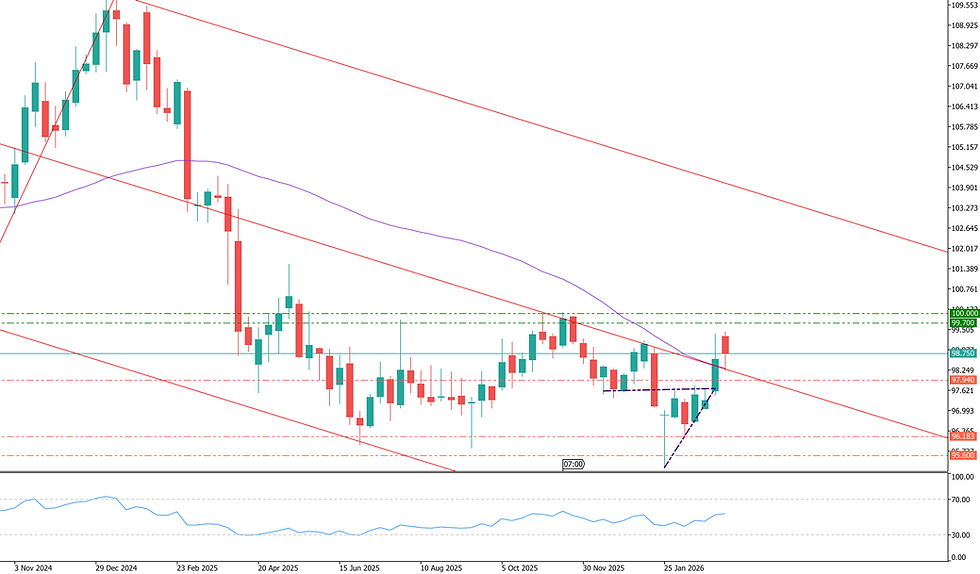
Recently, this relationship has started to diverge. Oil prices have pulled back sharply, but the US dollar has not weakened yet. The dollar still shows a bullish structure on the daily chart, and the upcoming US CPI inflation report could play an important role in determining whether that trend continues. A key level to watch in the US Dollar Index is 97.94, which was previously resistance and may now act as support after last week’s breakout.
DXY Daily Chart
Crude oil itself remains an important macro driver. After a strong breakout, prices have quickly reversed and are now showing a short-term bearish structure with lower lows forming. Oil recently bounced near the 80 level. If selling continues, traders will watch the price gap created earlier in the conflict between roughly 67.29 and 69.20 as a potential downside target.
In summary, oil prices, inflation data, and key technical levels across major currency pairs are all closely connected right now. The upcoming CPI report may be the next major catalyst that determines whether the US dollar continues its bullish trend or begins to lose momentum.
XTI/USD Daily Chart




Comments